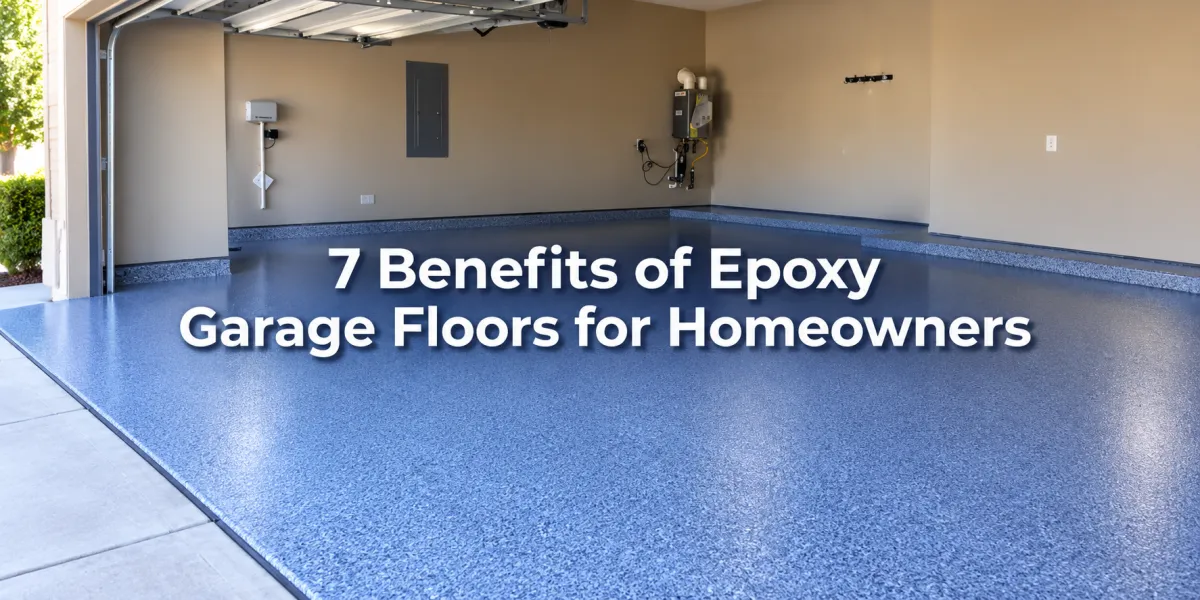
7 Benefits of Epoxy Garage Floors for Homeowners
If you've ever parked over a cracked, stained, or dusty concrete slab, you already know why epoxy garage floors have become one of the most requested upgrades among homeowners. What used to be a purely industrial flooring choice has turned into one of the fastest, most practical ways to transform a garage from a space you tolerate into one you actually enjoy using. It's not just about looks. The right coating changes how a garage functions day to day, from how easily it cleans up after a weekend project to how confident you feel parking on it in freezing weather. Once you see the difference next to a neighbor's cracked, oil-stained slab, bare concrete is hard to go back to. Here's what actually changes when you make the switch, and what's worth thinking about before you do.
What Is Epoxy Garage Flooring, Exactly?
This type of flooring is a resin-based coating applied directly over concrete. Once it cures, it forms a hard, seamless surface that bonds to the slab rather than just sitting on top of it the way paint does. That bond is what makes it so much tougher than a standard concrete sealer, and it's also why a proper installation usually starts with grinding or etching the concrete so the coating has something to grip.
Most homeowners come across the idea while looking into a professional epoxy flooring installation for the first time, and if you've searched for epoxy flooring NJ contractors before, you already know how many finish options exist. Some coatings are solid colors, others use flakes or metallic pigments for a decorative effect, but they all share the same core benefit: a durable barrier between your car, tools, and chemicals and the raw concrete underneath.
Why More Homeowners Are Making the Switch
Garage floors take a beating. Oil drips, road salt, dropped tools, and hot tires all add up over the years, and bare concrete just isn't built to handle it gracefully. It's part of why epoxy flooring NJ searches keep climbing every year among homeowners planning a garage upgrade. Here's what an epoxy coating actually changes.
1. Outstanding Durability
Epoxy cures into a surface that's significantly harder than bare concrete. It resists cracking, chipping, and the kind of surface wear that comes from rolling tool chests, dropped wrenches, or a car parked in the same spot every day. Most residential coatings are rated to handle years of daily vehicle traffic without the wear patterns you'd expect from paint or an unsealed slab.
2. Resistance to Stains, Oil, and Chemicals
Concrete is porous, which means oil, antifreeze, and brake fluid soak in almost immediately if the floor isn't protected. An epoxy coating closes off that porosity, so spills sit on the surface instead of sinking in, and you have time to wipe them up before they turn into permanent stains. That matters even more in a garage that doubles as a workshop, where solvents, paint, and cleaning products get spilled more often than anyone plans for.
3. Simple, Low-Maintenance Cleaning
Because the surface is sealed and smooth, dust and debris don't cling to it the way they do on raw concrete. A quick sweep or damp mop handles most day-to-day mess, and there's no sealer to reapply every year the way there is with a painted floor.
How to Keep an Epoxy Floor Looking New
Regular care is minimal. Sweep weekly to keep grit from scratching the surface, wipe up spills as they happen, and avoid dragging heavy metal equipment across the floor without a mat underneath. That's usually enough to keep the coating looking new for years.
4. Better Traction and Safety
A garage floor that's slick when wet is a real hazard, especially in winter when snow and ice melt off a parked car. Textured additives, like the aggregate used in flake epoxy floors, give the surface grip without sacrificing the smooth, finished look homeowners want.
5. A Brighter, More Reflective Garage
Epoxy coatings, especially lighter colors, reflect noticeably more light than bare concrete. Combined with the garage's existing lighting, that reflectivity can make the whole space feel bigger and easier to work in, which matters if the garage doubles as a workshop or home gym. Plenty of homeowners are surprised by how much less artificial lighting they actually need once the floor itself is bouncing light back into the room.
6. Long-Term Value for the Cost
Epoxy costs more upfront than a can of concrete paint, but paint peels, chips, and needs redoing every couple of years. An epoxy garage floor holds up far longer, which means less money spent redoing the job and less time spent clearing everything out of the garage to redo it.
Epoxy vs. Paint vs. Bare Concrete
Paint is the cheapest option at first but wears fastest, often needing attention within two to three years. Bare concrete costs nothing extra but stains, dusts, and cracks over time. Epoxy sits at the higher end of the upfront cost yet typically lasts a decade or more with basic care, which is why so many homeowners treat it as the better long-term investment.
7. Higher Resale and Curb Appeal
A finished garage floor reads as a well-maintained home to buyers and appraisers alike. Decorative finishes, like the marble-look epoxy styles that have become popular in showroom-style garages, can turn a garage into a genuine selling point instead of an afterthought.
Choosing the Right Finish for Your Garage
Not every epoxy floor looks or performs the same way, and the right choice depends on how the garage actually gets used. A daily-driver garage that doubles as a workshop benefits from a textured, high-traction finish, while a garage used mainly for storage or as a showroom for a car collection can lean into a more decorative option.
For pure durability under heavy use, quartz epoxy flooring is worth a look, since the aggregate adds both grip and long-term wear resistance. If the goal is closer to a polished showroom look, a metallic or marble-style finish accomplishes that without sacrificing the underlying protection. Budget, how the garage gets used day to day, and how much upkeep you're willing to do all factor into the decision. A team like TXR Epoxy can walk you through which finish fits your garage during a quick consultation, so you're not guessing based on photos alone.
Getting Started With Your Garage Floor Upgrade
Most installations start with a moisture test and a look at the concrete's current condition, since cracks or heavy staining affect prep work. From there, the concrete gets ground or etched, patched where needed, and coated in the chosen finish before a topcoat seals everything in. Depending on the size of the garage and the number of coats involved, the whole process usually wraps up within a few days.
If you've been putting off a stained, dusty, or cracking garage floor, this is usually the point where homeowners searching for epoxy flooring NJ options decide to get a quote and look at real numbers instead of guessing. Most contractors can request a free quote based on a few photos and your garage's square footage, which makes it easy to weigh the investment against years of just living with bare concrete.
An epoxy garage floor isn't something most people think about until they're standing on a cracked, stained slab wondering why they waited so long. Whichever finish you land on, the upgrade tends to pay for itself in fewer headaches and a space that finally works the way it should.
