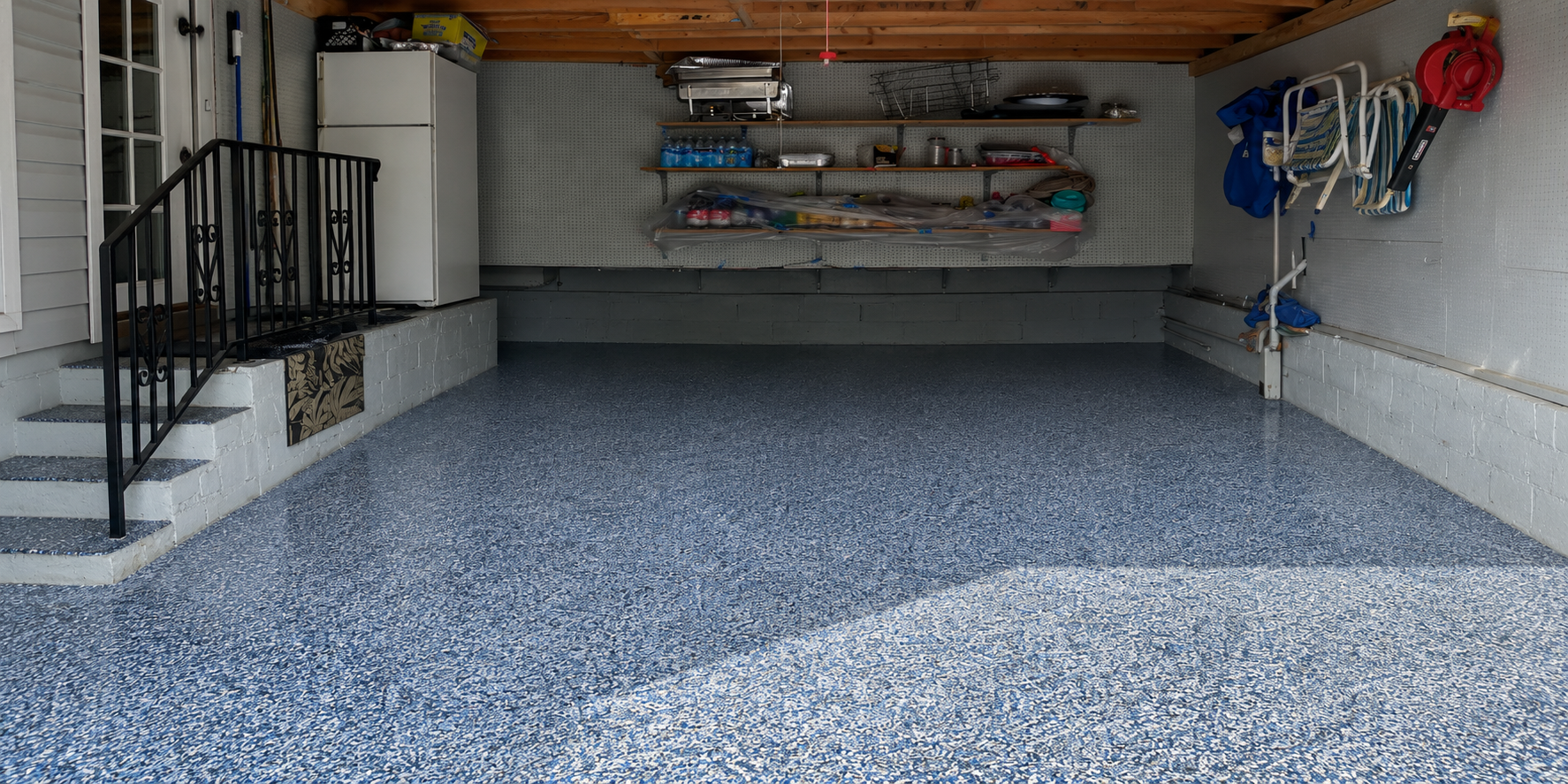
How Garage Floor Coating Protects Concrete Surfaces
Concrete feels indestructible, so it’s easy to assume your garage slab will take care of itself. It won’t. Every winter, every oil drip, and every car pulling in after a rainstorm wears it down a little more. Over time you get pitting, flaking, white salt stains, and gritty dust that ends up on everything you own. A garage floor coating stops most of that damage before it starts. It works by putting a tough, sealed layer between the slab and everything that attacks it. Here’s what concrete is up against in a garage, how a coating defends it, and what makes that protection last.
Why Bare Concrete Breaks Down in a Garage
To understand how a coating protects a slab, it helps to know why the slab fails in the first place. Concrete is strong under weight, but it has a few built-in weaknesses, and a garage exposes them every day.
Porosity
Concrete is full of tiny pores and capillaries left behind as the mix cures. Those channels pull in water, oil, and salt like a sponge. Anything that soaks in can stain the slab or start breaking it down from the inside.
Moisture and Freeze-Thaw Cycles
This is the big one in New Jersey. Water that soaks into the surface freezes on cold nights and expands. When it thaws, it leaves a little more space behind. Repeat that dozens of times a winter, and the top layer of concrete starts to crack and pop off in thin flakes. This problem is called spalling. Road salt makes it worse, since salty water soaks in faster and adds its own pressure as it dries.
Dusting and Surface Wear
Bare concrete slowly sheds a fine powder as tires, shoes, and equipment grind across it. That dust gets tracked into the house and settles on tools, shelves, and cars. Left alone, the wear deepens into rough, pitted patches, especially in tire paths.
How a Garage Floor Coating Protects Concrete
A coating doesn’t make concrete stronger on its own. What it does is change what touches the concrete. Water, salt, rubber, and chemicals hit the coating instead of hitting the slab directly.
It Seals the Surface
A properly installed coating soaks into the top of the prepared slab and cures into a solid, non-porous layer. The pores that used to drink in liquids are now filled and capped.
Against Water and Salt
With the surface sealed, snowmelt and road brine stay on top of the floor instead of soaking in. That cuts off the freeze-thaw cycle at the source. With no water inside the concrete, there’s nothing to freeze and expand, and far less risk of spalling.
Against Chemicals and Fluids
Motor oil, antifreeze, brake fluid, gasoline, and fertilizer can all stain or etch bare concrete. A cured coating resists most common garage chemicals long enough for you to wipe them up. The spill becomes a cleanup job, not permanent damage.
It Adds a Wear Layer
Think of a coating as a sacrificial skin. Tires, boots, and dropped tools scuff the coating instead of the slab. And a good system is much harder to scuff than you might expect.
Impact and Abrasion
A layered system built at the right thickness absorbs everyday knocks from dropped wrenches, rolling tool chests, and bike kickstands. Broadcast flakes or quartz add extra body to the coating, which helps in high-traffic paths.
Hot Tires
Tires pick up heat on the road. When a hot tire sits on a cheap, thin coating, it can soften the surface and lift it off when the car pulls away. A quality topcoat is formulated to resist that, so the protective layer stays put.
It Locks Down Dust
Once the surface is sealed, the slab can’t shed powder anymore. That’s a quiet benefit, but homeowners notice it fast. There’s less dust on the car and fewer gritty footprints in the house, and the garage actually stays clean after you sweep.
Why Epoxy Garage Floors Are the Go-To Protective System
There are plenty of sealers and paints on the market, but epoxy garage floors remain the most common choice for real protection. The reasons are practical.
A Strong Bond to Prepared Concrete
Epoxy bonds tightly to concrete that’s been ground to the right texture. That grip keeps the coating from peeling. It’s a big step up from garage floor paint, which mostly sits on the surface and wears through quickly.
A Layered Build You Can Match to the Space
A full system typically includes a base coat, an optional broadcast layer, and a protective topcoat. You can choose the finish based on how the garage is used. A solid epoxy floor improves durability with a clean, single-color look. A quartz broadcast adds grip for wet floors and ramps. If traction matters most, here’s how quartz epoxy improves slip resistance. Flake remains the most popular pick for everyday garages.
What Makes the Protection Last
A coating only protects concrete as long as it stays bonded. Most early failures trace back to what happened before the first coat went down.
Mechanical Surface Prep
Concrete needs to be diamond ground to open the pores and remove old sealers, oil, and weak surface material. Acid etching and quick rinses rarely produce the same bond. This step is the difference between a floor that lasts years and one that peels by spring.
Checking for Moisture
Some slabs push moisture up from the ground. Coating over a damp slab can trap that moisture and cause bubbles or lifting. Installers should check the slab and choose the right system before starting.
Repairing Cracks and Pits First
Cracks, pits, and spalled spots are filled and leveled before coating. That gives the system a smooth, solid base and keeps small defects from growing underneath. The crew at TXR Epoxy treats repair as part of every job. You can learn more about our family-run team and how we approach each floor.
What a Coating Can’t Fix
It’s worth being honest here. A coating protects the surface, not the structure.
Structural and Moving Cracks
If a slab is settling or heaving, or has wide cracks that keep moving, a coating will eventually crack along with it. Those problems need a structural fix first. Hairline and surface cracks, on the other hand, are routinely repaired and coated.
Neglected Maintenance
Even a great coating benefits from a little care. Sweeping out sand and squeegeeing winter slush keeps the topcoat in good shape for years.
If your garage floor already shows salt damage, dusting, or stains, it’s usually not too late. Most slabs can be repaired and coated rather than replaced. Take a look at the protective finishes we offer, then get a free quote for an honest assessment of what your concrete needs.
FAQs
Does a garage floor coating stop concrete from cracking?
It prevents the surface damage caused by water, salt, and freeze-thaw cycles, which is the most common cause of flaking and pitting. It can’t stop structural cracks caused by settling or shifting soil. Those need to be addressed before coating.
How does a coating protect against road salt?
The coating seals the pores in the concrete, so salty meltwater stays on top instead of soaking in. That stops the salt and freeze-thaw damage that causes spalling. Rinsing or squeegeeing the floor during winter helps even more.
Is epoxy better than garage floor paint?
Yes, for protection. Epoxy bonds into prepared concrete and builds a thicker, harder layer. Paint mostly sits on top and tends to wear through or peel under hot tires within a year or two.
Can you coat a garage floor that already has damage?
In most cases, yes. Pits, flaking, and surface cracks are ground, filled, and leveled during prep. The coating then goes over a solid, repaired base.
How long does a garage floor coating protect concrete?
A professionally installed system with proper prep can protect a slab for many years. The topcoat takes most of the wear and can be refreshed later without redoing the whole floor. How long it lasts depends on traffic, prep quality, and basic care.
Do epoxy garage floors hold up in cold New Jersey winters?
They do when installed correctly. A sealed floor keeps water out of the slab, and that’s what protects it from freeze-thaw damage. It also matters to choose a system rated for cold-weather use and to install it in the right conditions.
