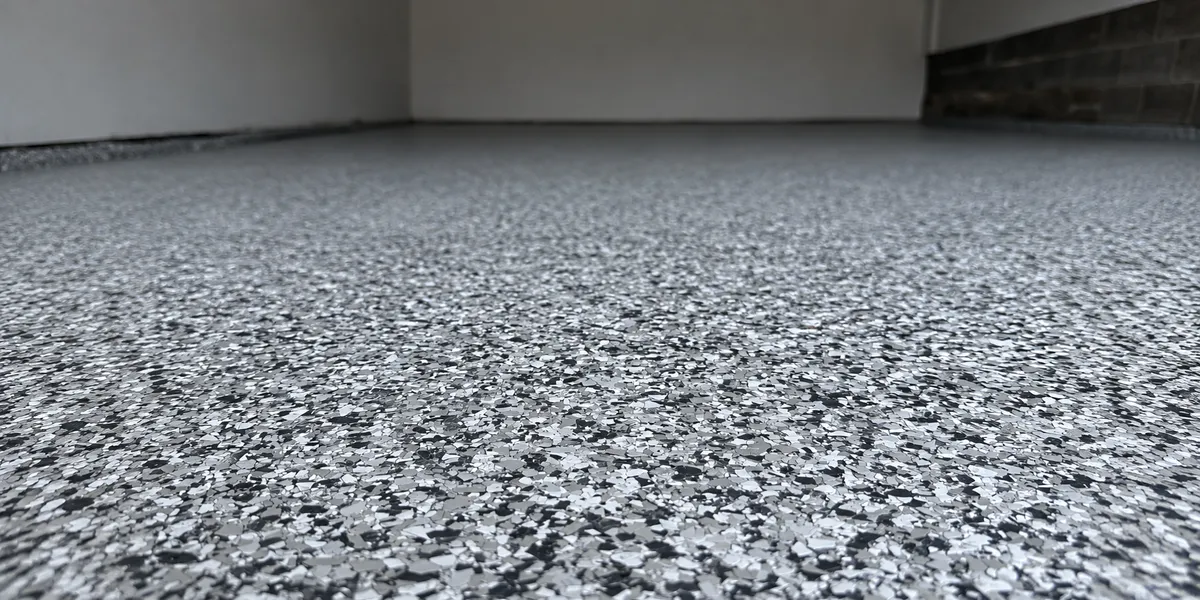
What Makes Epoxy Garage Floors Easy to Maintain
Bare concrete is a lot of work for a floor that never looks clean. It sheds a fine gray dust, soaks up every oil drip, and turns white and chalky after one winter of road salt. You sweep it, and somehow it still looks dirty. That’s why so many homeowners switch to epoxy garage floors. A good coating turns a thirsty, crumbly slab into a sealed surface that wipes clean in minutes. But what actually makes it so low maintenance? It comes down to how the coating is built, the finish you choose, and a few simple habits. Here’s what’s going on under your feet, and how to keep it looking new for years.
Why Epoxy Garage Floors Need So Little Upkeep
Concrete is porous. Under a microscope it looks like a sponge, full of tiny holes and channels. Liquids sink in, dirt settles into the texture, and the surface slowly breaks down into dust. Most of the cleaning you do on a bare slab is a fight against that porosity.
An epoxy coating ends the fight by filling and covering those pores. Once it cures, you’re no longer cleaning concrete. You’re cleaning a hard, smooth layer of resin that sits on top of it.
A Seamless Surface With Nowhere for Dirt to Hide
The tile has grout lines. Rubber mats have edges and seams. Epoxy goes down as a liquid and cures into one continuous sheet, wall to wall. There are no joints for grit to pack into and no corners for mold or grime to collect. A broom or dust mop glides straight across it, and what you pick up actually leaves the floor.
A Non-Porous Finish That Stops Stains at the Surface
Because the coating is non-porous, spills stay on top instead of soaking in. That’s the single biggest reason maintenance gets easier. A stain on bare concrete is often permanent. The same spill on a coated floor is usually just a wipe.
Oil, Antifreeze, and Brake Fluid
Automotive fluids are the classic garage stain. On a sealed floor, they bead up and sit there until you deal with them. Blot with a shop towel, follow with a damp mop, and the spot is gone. The sooner you clean it, the better, but even a drip that sits overnight rarely leaves a mark.
Road Salt and Winter Slush
In New Jersey, the winter salt is what really eats garage floors. Salty meltwater soaks into concrete, freezes, expands, and pops off the surface in flakes. A coated floor keeps that brine on top, where you can squeeze it out the door instead of letting it work its way into the slab.
The Features That Make Cleaning Faster
Not every garage floor coating cleans up the same way. A few design choices make a real difference in how much time you spend on upkeep.
Gloss and Light Colors Show What Needs Cleaning
A glossy finish reflects light, which makes the whole garage brighter and makes spills easy to spot. Lighter colors do the same thing. Some people worry that this means the floor looks dirty faster. In practice, it means you catch a drip before it gets tracked around the house.
Flake Texture Hides Everyday Dust
If you’d rather not see every speck, a broadcast flake finish is the forgiving choice. The multicolored chips break up the surface visually, so light dust and tire marks blend in between cleanings. It’s one reason flake is the standard system on most of the garage coating options we install. The flakes also add a little texture underfoot, which helps when the floor is wet.
Topcoats That Resist Hot Tire Pickup
Hot tires can soften cheap, thin coatings and pull them right off the floor. That leaves bald patches that are hard to clean around. A quality system uses a tough, UV-stable topcoat that holds up to tire heat and resists yellowing. If you’re weighing materials, this breakdown of epoxy vs polyaspartic vs polished concrete explains how each one handles hot tires and cold-weather installs.
A Simple Routine That Keeps the Floor Looking New
The good news is that keeping epoxy garage floors clean doesn’t require special equipment or a weekend of scrubbing. A light, regular routine does most of the work.
Weekly: Dust Mop or Soft Broom
Grit is the enemy of any glossy finish. Sand and small stones act like sandpaper under shoes and tires. A quick pass with a microfiber dust mop or a soft-bristle broom once a week keeps abrasive dirt from dulling the surface.
Monthly: Damp Mop With a Gentle Cleaner
Once a month, or more in winter, mop the floor with warm water and a small amount of pH-neutral cleaner. A foam mop or microfiber mop works well. If you use any soap, rinse with clean water, since leftover residue can leave a hazy film and make the floor slippery.
As Needed: Spills and Spot Cleaning
Wipe up chemicals, oil, and fluids as soon as you notice them. For a stubborn scuff or tire mark, a soft scrub pad and a little cleaner usually lifts it. Never reach for a wire brush.
What to Avoid
Acidic cleaners like vinegar or citrus degreasers, which can dull the finish over time
Steel wool, wire brushes, and harsh abrasive powders
Soap-heavy cleaners that leave a slippery film
Dragging heavy equipment or jack stands without a pad underneath
How Installation Quality Decides Maintenance Later
Here’s something many homeowners don’t hear: how easy your floor is to maintain in year five is mostly decided on install day. A floor that peels or lifts in patches becomes a maintenance headache no matter how well you clean it.
Surface Prep
The concrete has to be mechanically ground, cleaned, and repaired before any coating goes down. That rough profile gives the resin something to grip. Skipping prep is the most common reason DIY kits fail within a year or two. At TXR Epoxy, every floor starts with grinding and crack repair so the coating bonds tight. You can read more about how a garage floor coating protects concrete once that bond is in place.
Coating Thickness and Topcoat
Thin coatings wear through quickly in tire paths. A properly built system uses a solid base coat, a broadcast layer if you want flake or quartz, and a protective topcoat. That layered build lets the floor shrug off daily traffic instead of slowly wearing down to bare concrete.
Seasonal Care for New Jersey Garages
The Jersey Shore throws a little of everything at a garage, so a few seasonal habits go a long way.
Winter
Keep a squeegee near the door and push slush and salty meltwater out after storms. Mop more often during salt season. A coated floor won’t absorb the brine, but leaving it to dry leaves a white residue that dulls the shine.
Summer
Heat and sun are the concerns here. If your garage door faces west and stays open, a UV-stable topcoat keeps the color from fading or yellowing. Sweep out sand after beach days, since it’s surprisingly abrasive.
A low-maintenance floor also changes how you use the space. Once cleanup takes minutes, it’s easier to turn the garage into a gym, workshop, or hangout. This guide on how epoxy garage floors improve your garage space walks through exactly that. If your slab is stained, dusty, or flaking now, the first step is an honest look at its condition. You can request a free quote and get a straight answer on what it needs.
FAQs
How often should I clean an epoxy garage floor?
A quick dust mop or sweep once a week keeps grit off the surface. Plan on a damp mop with a gentle cleaner about once a month, and more often during winter salt season. Wipe up spills whenever they happen.
What is the best cleaner for epoxy garage floors?
Warm water with a small amount of pH-neutral cleaner is all most floors need. Avoid vinegar, citrus cleaners, and heavy soaps. If you use any soap, rinse afterward so no film is left behind.
Will oil stain an epoxy floor?
In most cases, no. Because the coating is non-porous, oil sits on the surface instead of soaking in. Blot it with a towel and mop the spot, and it usually leaves no trace.
Can I use a pressure washer on my garage floor coating?
A pressure washer isn’t necessary. Held too close, it can force water under the edges or damage the finish. A mop and squeegee do the job better. If you do use one, keep it on a low setting and at a distance.
Does a flake finish make maintenance easier?
Yes, for most people. The multicolored chips hide light dust, tire marks, and small scuffs between cleanings. They also add a bit of texture, which helps with traction when the floor is wet.
How long does an epoxy garage floor stay easy to maintain?
A professionally installed floor with proper prep and a quality topcoat stays easy to clean for many years. Regular sweeping protects the gloss. Over time, a fresh topcoat can restore the shine without replacing the whole system.
