How Long Does Epoxy Flooring Take? A Day by Day Install Timeline
You have picked the finish, you like the color, and the quote looks right. Now comes the practical question every homeowner and business owner asks next: how long is my garage, basement, or shop going to be out of commission? It is a fair thing to plan around. Cars need a place to park, and businesses need the doors open.
The short version is that most floors take less time than people expect. This guide walks through how long epoxy flooring takes to install, what happens on each day, and when you can walk, move furniture, and park on the new floor.
How long does epoxy flooring take to install?
Most residential garage floors take one to two days to install, and a standard flake floor is a two-day job. Quartz systems take four to five days because they get an extra moisture barrier coat and more build-up. Metallic, solid color, and polished concrete timelines are confirmed with your final quote.
The biggest variables are the system you choose, the size of the space, and how much repair the slab needs. A clean two-car garage with a few hairline cracks moves faster than a pitted slab that needs heavy patching. That is why the timeline is set at the quote, after the crew has seen your floor or your photos.
What happens on day one of an epoxy floor install?
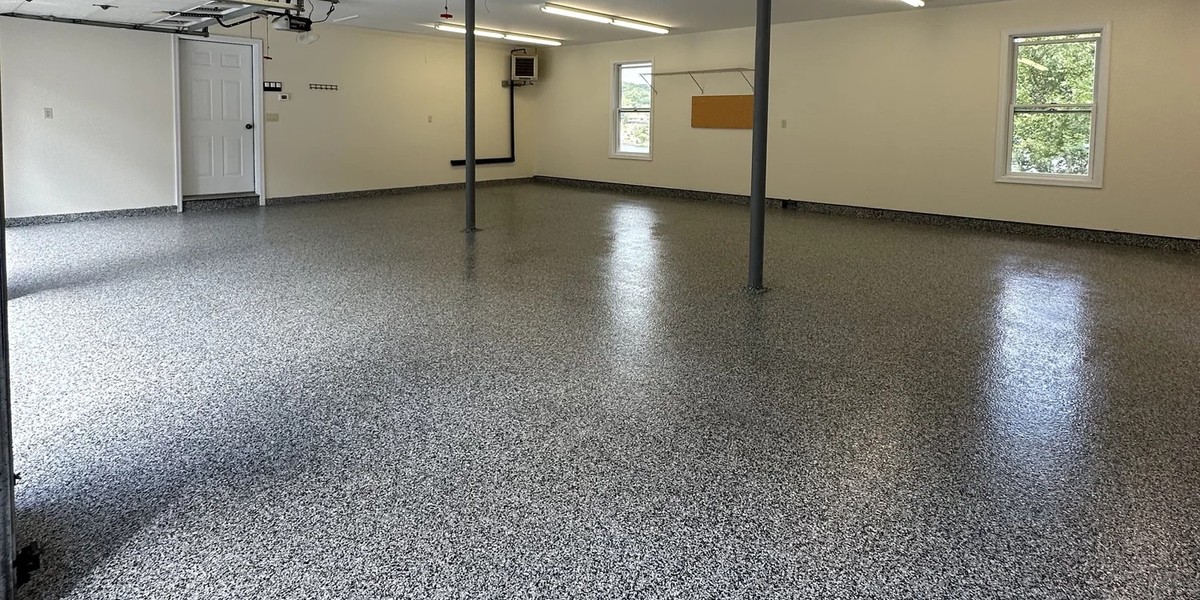
Day one is all prep. The concrete gets mechanically ground, every crack and chip is repaired, and a moisture barrier goes down before any color. On a flake floor, the flakes are broadcast into the coat by hand the same day. This is the day that decides whether the floor lasts.
Here is what that looks like on a TXR job:
Grinding. The slab is profiled with a professional grinder on 30 and 80 grit diamond pads, run through a dustless system, so the coating has a surface it can bond to.
Repairs. Cracks, pits, and chips are filled and leveled, so the finish goes over a sound base.
Moisture barrier. An epoxy MVB coat, short for moisture vapor barrier, goes down on every install. Moisture pushing up through a slab is the most common reason epoxy floors fail and peel.
Flake broadcast. For flake systems, the flakes are broadcast into the coat by hand.
An acid wash or a quick sanding is faster and cheaper than grinding, but it is the reason some coatings lift off in sheets a year later. A few extra hours of prep on day one is what lets you stop thinking about the floor for years.
What happens on day two?
Day two is the seal. A polyaspartic topcoat goes down over the full floor in your choice of gloss or satin. That topcoat is the layer that takes hot-tire pickup, dropped tools, and road salt, and it leaves the floor seamless, non-porous, and sealed against peeling and cracking.
Before the crew leaves, they walk the finished floor with you. If you are still weighing topcoat and system options, our comparison of epoxy vs polyaspartic vs polished concrete for NJ garages breaks down the differences.
Why does a quartz floor take longer?
Quartz takes four to five days because it gets a second moisture barrier coat and additional build-up. That extra layering is what gives quartz its high-traction, non-slip surface, which is why it is popular for ramps, commercial kitchens, and facilities where safety matters most.
If your space needs grip more than speed, the extra days are usually worth it. You can read more about what makes quartz epoxy flooring so durable. For garages where turnaround matters, flake is the standard system, and our guide to flake epoxy flooring for garages explains why.
How long before you can walk, move furniture, and park on it?
Once the job is finished, furniture can go back in the next day and vehicles can drive back on two days after completion. Waiting out the cure is what lets the coating reach full strength, so the floor holds up to tires and heavy items the way it should.
It helps to plan around that window. Park in the driveway or on the street for a couple of nights, and leave shelving, tool chests, and storage bins out until the next day. In a basement, plan for the room to be off-limits until the crew says it is ready.
Any time coatings go down indoors, good airflow during the job is smart. The EPA explains how volatile organic compounds affect indoor air quality if you want the background. Ask your installer what ventilation they recommend for your space.
How do you prepare your space before the install day?
Clear the floor completely, move vehicles out, and give the crew access to power and a clear path. The emptier the space, the faster day one goes. If you have items that cannot leave the room, mention them at the quote so the timeline accounts for them.
Empty the garage, basement, or room of furniture, bins, and anything stored on the floor.
Plan where the cars will park for about two days after the job is finished.
Point out cracks, stains, or damp spots so they are priced and scheduled up front.
For businesses, share your busiest days and any areas that must stay open.
Larger commercial spaces are scheduled around your operations so downtime stays as small as possible, and you get a firm timeline with your quote.
How do you get a firm timeline for your floor?
The fastest way is to request a quote online. Add a few photos of the floor, see a price range right away, and the team finalizes your quote within 24 to 48 hours, including how long your space will be out of service.
TXR Epoxy is a family-owned, licensed, and insured crew based in West Long Branch, serving Monmouth County, the Jersey Shore, and the wider Tri-State Area. The crew that quotes your space is the crew that installs it. Compare every system on the services page, see finished floors in the gallery, or call (908) 275-5480 to talk it through. Once your floor is in, here is how to keep an epoxy garage floor easy to maintain.
Frequently asked questions
How long does epoxy flooring take to install?
Most residential garages take one to two days, and a standard flake floor is a two-day job. Quartz takes four to five days. Metallic, solid color, and polished concrete timelines are confirmed with your final quote.
How long does an epoxy garage floor take to cure before I can park on it?
With TXR Epoxy, vehicles can drive back on two days after the job is finished. Furniture and stored items can go back the next day.
Why does a quartz epoxy floor take longer than flake?
Quartz gets a second moisture barrier coat and additional build-up, which adds time. That layering gives quartz its high-traction, non-slip surface.
Does slab repair add time to an epoxy install?
Repairs happen during day one prep, so most cracks, pits, and chips are handled inside the normal timeline. Heavy repair work is priced and scheduled once the crew sees photos or walks the space.
Can a business stay open during an epoxy floor install?
Larger commercial spaces are scheduled around your operations so downtime stays as small as possible. You get a firm timeline with your quote.
How soon will I get a timeline from TXR Epoxy?
Request a quote online with a few photos and you see a price range right away. The team finalizes your quote, including the schedule, within 24 to 48 hours.
