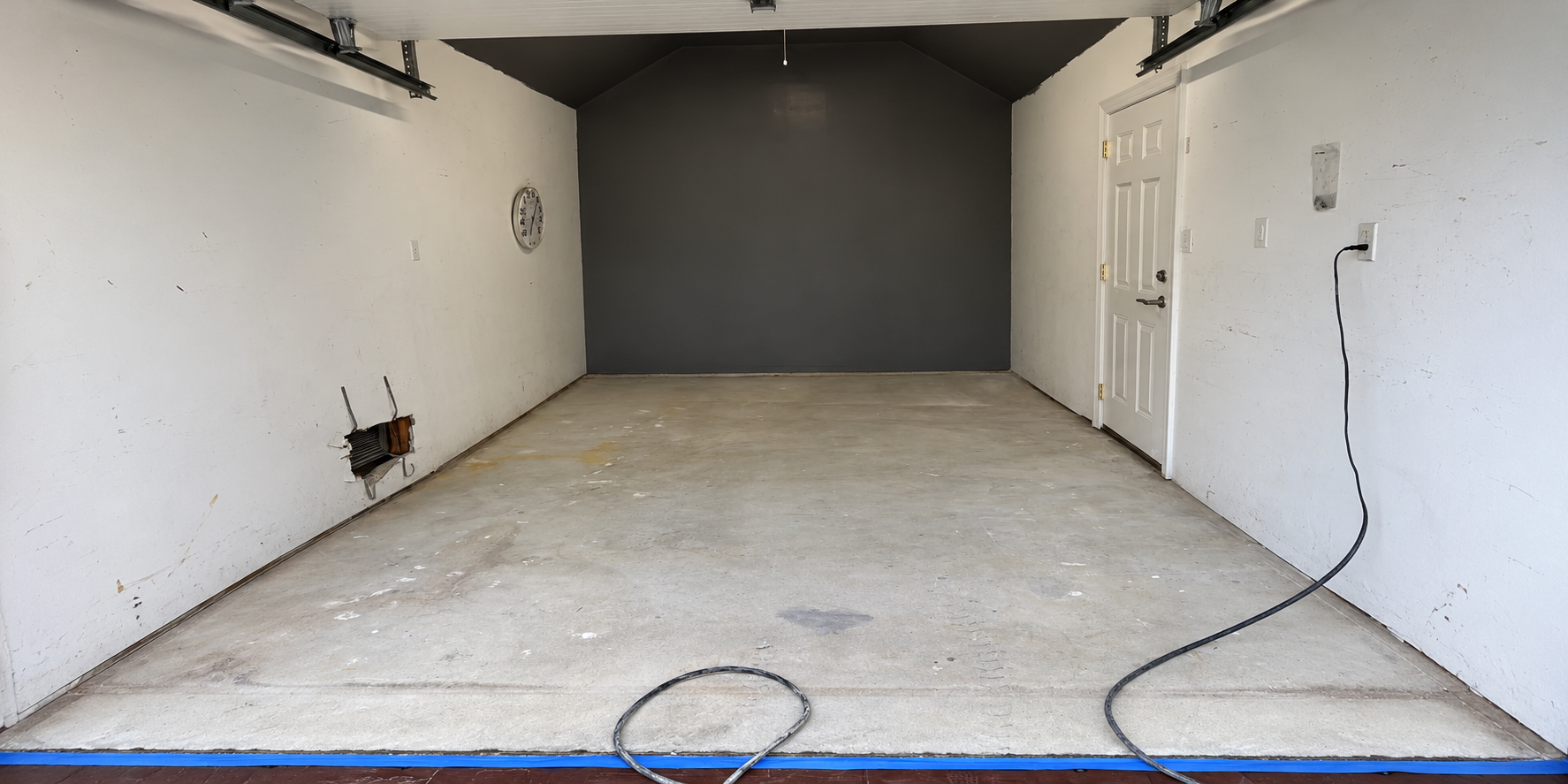
Why Do Epoxy Floors Peel? Causes, Warning Signs, and Fixes
You spent a weekend clearing out the garage, the new floor looked great, and then a few months later you notice it. A bubble near the door. A patch lifting where you park. A strip of coating that peels up in your hand like old tape. It is one of the most frustrating things that can happen to a floor, and it is more common than it should be.
The good news is that peeling is almost never random. It has a few clear causes, and every one of them can be prevented at install. This guide explains why epoxy floors peel, how to spot a coating that is starting to fail, and what a floor needs so it holds up for years in a New Jersey garage, basement, or shop.
Why do epoxy floors peel?
Epoxy floors peel because the coating never bonded tightly to the concrete. The most common causes are skipped surface prep, such as an acid wash or a quick sanding instead of mechanical grinding, moisture pushing up through the slab with no moisture barrier, and a thin topcoat that cannot handle hot tires, salt, and dropped tools.
In other words, the problem usually starts on install day, not the day you notice it. A coating can look perfect for weeks and still be sitting on a surface it never really grabbed. Once traffic, temperature swings, and moisture go to work on it, the weak spots show up.
What are the signs an epoxy floor is starting to fail?
Most failing floors give you warnings before large sections come up. Catching them early can make the repair smaller. Look for:
Bubbles or blisters. Small raised spots, often in one area, can point to moisture or air trapped under the coating.
Lifting where tires sit. Peeling in the exact spots where you park is a classic sign of hot tire pickup on a weak topcoat.
Edges that flake. Coating that chips at the garage door line or along walls usually means the bond was weak from the start.
White haze or cloudy patches. Discoloration can show moisture working its way through the floor.
Sheets that peel in one piece. If a section comes up smooth on the bottom, the coating was sitting on the concrete instead of bonding into it.
Does poor surface prep cause epoxy to peel?
Yes. Poor surface prep is one of the biggest reasons epoxy floors peel. Coatings need an open, textured concrete surface to grip. An acid wash or a quick sanding is faster and cheaper, but it often leaves a slick surface, and that is the reason some coatings lift off in sheets a year later.
At TXR Epoxy, every slab is profiled with a professional grinder on 30 and 80 grit diamond pads, run through a dustless system. Grinding opens the pores of the concrete and removes the weak top layer, old sealers, and grime, so the coating has something solid to bond to. It takes more time on day one, and it is the step a cheap bid is most likely to skip.
Prep also includes repairs. Cracks, pits, and chips are filled and leveled during day one, so the finish goes down over a sound base instead of bridging over damage that keeps moving underneath it.
Can moisture in concrete make epoxy peel?
Yes. Moisture coming up through a concrete slab is the single most common reason epoxy floors fail and peel. Concrete is porous, and water vapor from the ground can push up through it. With nothing to stop it, that vapor builds pressure under the coating until it blisters and lets go.
This matters a lot in basements and older garages, where slabs often sit close to damp soil. The EPA's moisture control guidance for buildings explains how water moves through foundations and slabs, and it is a useful read if your space has ever felt damp.
That is why every TXR floor gets an epoxy MVB coat, short for moisture vapor barrier, before anything decorative goes down. It is not an add on. Quartz systems get a second MVB coat, which is part of why they take longer to install. Our post on how long epoxy flooring takes walks through the full install timeline.
Why does epoxy peel where I park my car?
Peeling in the tire paths is usually hot tire pickup. Tires heat up on the road, and when you park, that soft, hot rubber grips the floor. As it cools and you pull out, it can tug a weak coating right off the concrete. Road salt and winter slush make the problem worse.
The fix is a stronger top layer over a well bonded base. TXR finishes floors with a polyaspartic topcoat in your choice of gloss or satin. That topcoat is the layer that takes your hot tire pickup, dropped tools, and road salt. A single coat of builder grade epoxy costs less up front and often shows it inside a season. For a deeper look at the materials, see our comparison of epoxy vs polyaspartic vs polished concrete for NJ garages.
Can a peeling epoxy floor be repaired?
In most cases, yes, and you almost never need a new slab. A peeling floor can be repaired or fully resurfaced. The failed coating comes off, the concrete gets ground and repaired, and a new system goes down the right way, with a moisture barrier and a durable topcoat.
Patching only the peeling spot over a weak bond tends to buy a little time before the next spot lets go. If a large part of the floor is lifting, a full resurface is usually the more lasting answer. TXR handles chip, crack, and surface repair plus full resurfacing as part of its epoxy flooring services, bringing worn or pitted concrete back to a level, solid base ready for a fresh finish.
How do you keep a new epoxy floor from peeling?
You prevent peeling by getting the install right and giving the floor time to cure. When you compare quotes, ask each contractor four things:
Is the concrete mechanically ground? Grinding, not an acid wash or quick sanding.
Is there a moisture barrier? It should be included on every job, not left as an option.
What is the topcoat? Ask what layer is taking hot tires and salt.
Who is actually on your floor? At TXR, the crew that quotes your space is the crew that finishes it.
Then respect the cure. On a TXR install, furniture can go back the next day, and vehicles can drive back on two days after the job is finished. Rushing a car onto a coating that has not cured is an easy way to undo good work. After that, simple care goes a long way, and our post on what makes epoxy garage floors easy to maintain covers the basics.
If you are still choosing a finish, flake is TXR's standard garage system for its durability and traction. You can read more in our flake epoxy flooring guide for garages, or browse finished floors in the TXR gallery.
Frequently asked questions
Why is my epoxy garage floor peeling?
Most peeling comes from weak bonding. The usual causes are concrete that was not mechanically ground, moisture coming up through the slab with no moisture barrier, and a topcoat that cannot handle hot tires and road salt.
Can you put new epoxy over peeling epoxy?
Coating over a failing layer usually fails too, because the new coat is only as strong as what is under it. The loose coating should come off, and the concrete should be ground and repaired before a new system goes down.
Do I need a new concrete slab if my epoxy is peeling?
Almost never. Cracks, pits, and chips can be filled and leveled during prep, and worn concrete can be resurfaced into a sound base for a fresh finish.
Does every TXR Epoxy floor include a moisture barrier?
Yes. Every TXR floor gets an epoxy MVB moisture barrier coat before anything decorative goes down, and quartz systems get a second coat of it.
How soon can I park on a new epoxy floor?
With TXR Epoxy, vehicles can drive back on two days after the job is finished, and furniture can go back the next day.
How do I get a quote to fix a peeling floor?
Request a quote online with a few photos of the floor, including any problem spots. You see a price range right away, and the team finalizes your quote within 24 to 48 hours. Repair work is quoted once the team sees your photos.
Get a floor you only pay for once
If your floor is peeling, bubbling, or lifting where you park, it can usually be brought back. TXR Epoxy is a family owned, licensed and insured crew based in West Long Branch, serving Monmouth County and the Jersey Shore. Send a few photos through the free quote form and get a straight answer on what your floor needs, or call (908) 275-5480.
